NREMT EMT EXAM PREP 2026
- 4.6
- Rating
- 10.00K
- Installs
- Free
- Price
 Analysis by App-foxy
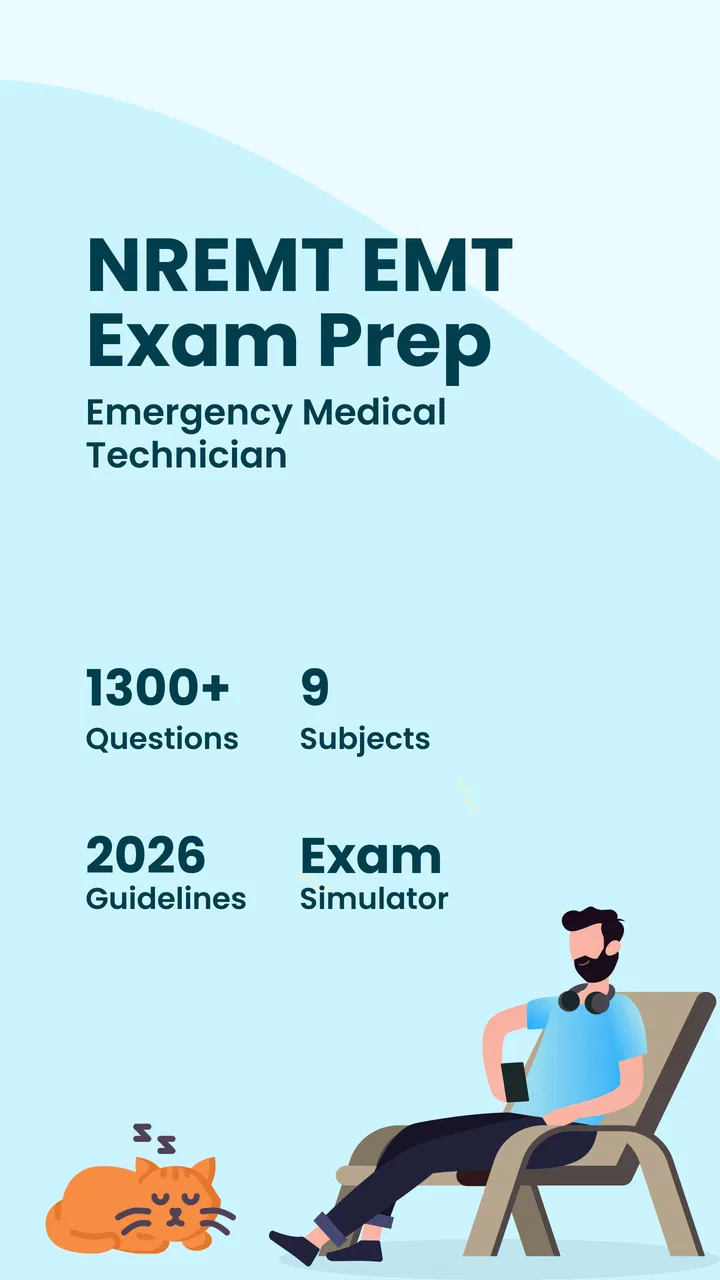
Preparing for the NREMT EMT exam is different from simply reading an emergency-care textbook. You need to recognize patterns, choose the safest next action, and make decisions while the clock and your own nerves are working against you. I found NREMT EMT EXAM PREP 2026 useful because it turns that kind of preparation into short practice sessions rather than asking me to study a large block of material every time I open it.
This free Education app from Prepia Inc is built around targeted questions and exam simulators. That focus makes it more practical than a general medical reference when my goal is specifically to prepare for the EMT certification exam. It is available for Everyone, runs on Android 7.0 or later, and the current version is 2.1.020. The app has reached over ten thousand installs and holds a 4.6 average from more than two hundred ratings, which suggests that other learners are finding the format worthwhile.
My overall impression is positive, but I would not treat it as a complete replacement for an EMT course, instructor feedback, hands-on practice, or a current textbook. It works best as a repeatable question-training tool. The real value appears when I use it deliberately: first to discover weak areas, then to review mistakes, and finally to simulate the pressure of answering without help.
You May Also Like

 AccuWeather: Weather Radar
AccuWeather Review: A Quick, Clear Forecast for Everyday Decisions
For everyday plans, the best forecast is the one you can understand quickly. AccuWeather makes rain timing, radar, and local conditions easy to act on, with a few trade-offs.

 Hill Climb Racing
Why Hill Climb Racing Still Turns Crashes Into One More Run
A tiny car, a bumpy hill and one more upgrade: Hill Climb Racing keeps resurfacing because its simple chaos makes every near-miss feel personal.

 AliExpress - Shopping App
AliExpress Makes Global Shopping Feel Personal, but Shoppers Bear the Risk
AliExpress turns a global marketplace into a pocket-sized discovery engine. Its reach is useful, its shopping loop compelling, and its trade-offs easy to miss.

 Lords Mobile: Kingdom Wars
Lords Mobile Is a Kingdom-Building Routine, Not a Quick Match
A case-by-case verdict on the building, battles, device demands, and social commitments that make Lords Mobile rewarding for some players and exhausting for others.

 PDF Scanner app - TapScanner
TapScanner Makes Paperwork Easier to Capture, Check, and Share
TapScanner makes scanning with a phone feel less like a rescue operation and more like a dependable step in getting work done. Its capture tools are useful, though not flawless.

 Block Blast!
 Shows How Much a Puzzle Game Can Leave Out
A quiet grid game shows why puzzle players increasingly value instant clarity, repeatable skill and low-pressure play—and where the genre still needs to catch up.
More From Our News Desk
View All News


How I built a useful daily study routine
I treat a daily routine as a way to make study sustainable, not as a test of how many questions I can finish. A useful next step is to decide what would count as progress before opening the app: clearer reasoning, fewer rushed choices, or better recognition of a weak topic. That small target makes it easier to spot when a session is helping—and when I should change course.
Starting with short targeted sessions
I would begin by avoiding the temptation to jump straight into full exam simulations. A long practice test can show that something went wrong, but it does not always show why. Targeted practice is more useful at the beginning because it lets me isolate a topic, notice recurring errors, and work on one decision-making problem at a time.
A realistic routine is a short session during a commute break, after class, or before an evening shift. I answer a manageable group of questions, pause when I encounter an uncertain answer, and write down the reason for my choice. The important part is not merely remembering the correct option. I want to know whether I missed a symptom, misunderstood the priority, or selected an intervention before completing a more urgent assessment.
This is where the app’s exam-focused design has an advantage over simply rereading notes. Reading can create a comfortable feeling of recognition, while questions expose whether I can actually apply the information. When I answer incorrectly, I treat that result as a study instruction rather than as a score to hide from myself.
Turning mistakes into a review loop
One of the most useful habits is to keep a small error log outside the app. I record the topic, the answer I chose, and the clue that should have changed my decision. For example, I might note that I focused on a visible injury while overlooking a more immediate airway or breathing concern. That kind of note is more valuable than writing down only the correct letter.
On the next session, I revisit the same type of reasoning before moving to unrelated questions. This creates a simple loop: practice, identify the mistake, review the principle, and test it again later. The app supplies the questions and simulations, but the learning improves when I add this personal layer. Without it, repeated practice can become a memory exercise in which familiar wording feels easier even though the underlying decision is still weak.
I also prefer to separate content errors from test-taking errors. If I did not know the clinical concept, I need textbook or instructor review. If I knew the concept but rushed past a key detail, I need slower reading and better prioritization. NREMT EMT EXAM PREP 2026 is strongest for revealing both problems, but it cannot independently explain every personal misunderstanding as thoroughly as a teacher can.
Knowing when to use a simulator
Exam simulators are most useful after I have already worked through targeted practice. I use them to check whether my concentration survives a longer sequence of questions and whether I keep applying the same priorities when topics change quickly.
I would not use a simulator as a daily warm-up. Doing so can make the process feel like a score chase and may leave too little time to repair weaknesses. A better pattern is to schedule a simulation occasionally, review every uncertain answer afterward, and then return to targeted work. A correct answer that I guessed deserves review too; guessing can produce a misleadingly comfortable result.
For a learner with a busy schedule, this approach also answers an important practical question: yes, the app can fit into short study windows, but the short sessions should have a purpose. Ten minutes spent answering randomly is less effective than ten minutes focused on one recurring weakness.
Checking the options before committing to a routine
The app is free to download, which makes it easy to try without committing money at the beginning. It also includes in-app purchases priced from $7.99 to $59.99 per item. I would explore the freely available experience first and decide whether the question style, explanations, and simulator workflow fit my needs before paying for anything.
That choice matters because a paid study tool is worthwhile only when I use it consistently. Someone who opens the app once, dislikes the question format, and abandons it gains little from purchasing extra material. On the other hand, a student who is already using it several times a week may find an optional purchase more sensible than collecting several unrelated preparation apps.
Settings worth checking before serious practice
I would spend a few minutes looking through the available controls before starting a serious study plan. In a test-preparation app, small choices about how a session behaves can affect the quality of the result. I want to know whether I am practicing a focused subject, entering a mixed simulation, or simply answering a quick set for revision. I also check how answers and explanations are presented so I do not confuse practice mode with a realistic exam run.
I would keep the first sessions comfortable enough to understand the interface. Once I know where feedback appears and how to move through questions, I would make the conditions stricter for simulations. The point is to avoid accidentally giving myself extra help during a session intended to measure readiness.
Another useful check is the device itself. Since the app supports Android 7.0 and later, it should suit many older Android phones, but the experience still depends on screen size, battery condition, and notification interruptions. I would silence distracting notifications and avoid beginning a full simulation when I may need to leave halfway through. A broken session tells me less than a completed one.
I would also distinguish between settings that improve learning and settings that merely improve comfort. A larger text display or a calmer environment can help me read carefully. But if I always practice with every possible aid, I may be less prepared for the concentration required in a formal exam. I use comfortable conditions for learning new material and more controlled conditions for readiness checks.
Faster patterns that save study time
The fastest effective pattern I found is not answering as quickly as possible. It is reducing repeated setup. I keep a regular study window, use the same notebook for mistakes, and decide in advance whether a session is for learning or measurement. That removes the small decisions that often cause me to waste the first few minutes.
For learning sessions, I read each question carefully, answer, and immediately examine the reasoning. For measurement sessions, I avoid interrupting the flow and review afterward. Mixing those two purposes creates confusion: reviewing after every item can help understanding but makes the result less meaningful as a simulation.
I also use a two-pass method for difficult questions. On the first pass, I choose the answer that best matches the immediate priority. If I am unsure, I mark the uncertainty in my notes rather than spending an excessive amount of time on one item. During review, I return to the question and explain why the other options are less appropriate. This is especially helpful for questions where several answers sound medically reasonable but only one addresses the most urgent need.
A second efficient pattern is alternating familiar and weak topics. Studying only the weakest area can become discouraging, while studying only comfortable topics creates false confidence. I use a short familiar section to establish momentum, then spend the main part of the session on the area where my reasoning breaks down. I finish by answering a few mixed questions to see whether the correction transfers beyond one topic.
Another practical tip is to read the question stem twice only when necessary. The first reading identifies the situation and the task. The second should focus on qualifiers such as timing, severity, changes in condition, and what has already been done. I do not reread automatically, because that can slow me down without improving comprehension. I reread when the answer choices seem close or when I notice that I am reacting to one dramatic detail.
Where the app helps experienced learners
Someone who already understands basic EMT concepts may get the most from the app by using it as a diagnostic tool. Instead of starting with broad review, I can use mixed questions to discover which decisions remain inconsistent. Then I switch to targeted practice and return to mixed simulations later.
This workflow is more efficient than repeating an entire textbook chapter whenever I miss one question. It also helps experienced learners test whether their knowledge is current in practical decision-making, rather than relying on confidence from previous coursework. Familiarity with terminology is not the same as being ready to prioritize under exam conditions.
I would still compare difficult topics with authoritative course material or ask an instructor about ambiguous reasoning. Practice questions are valuable, but they should not become the sole authority for clinical judgment. When an answer conflicts with what I was taught, I investigate the difference instead of memorizing whichever option appeared in the app.
Advanced limits and realistic trade-offs
The main limitation is that a question bank, even one centered on NREMT EMT preparation, cannot reproduce every part of becoming a capable EMT. It can train recognition, prioritization, and exam stamina. It cannot replace lifting technique, patient communication, equipment handling, team coordination, or supervised scenarios.
This distinction is important for new students. If I am still learning how to perform an assessment or understand why an intervention is used, jumping into repeated questions may expose gaps without fixing them. I would pair the app with instruction and practical training. It is a reinforcement tool, not a substitute for clinical education.
There is also a risk of memorizing patterns in the wording. Repeated practice can make familiar questions feel easy, especially if I remember the answer rather than the principle. To reduce that risk, I explain the reasoning aloud, change the order of topics, and review questions I answered correctly by guessing. I also avoid measuring progress only by a rising score.
The in-app purchase model is another trade-off. The free entry point is helpful, but learners should decide whether additional content genuinely improves their routine. I would not buy simply because I feel anxious about the exam. I would buy only if I have used the available material consistently and can identify a specific gap that extra access would address.
People who want a full medical reference, detailed lectures, or instructor-led explanations may prefer a course platform or textbook. People who need flashcards with extensive customization may also find a dedicated flashcard app more suitable. NREMT EMT EXAM PREP 2026 is a better match for someone who learns by answering questions and wants exam-style practice in a focused app.
Who should use it and who should skip it
I recommend it to EMT students who need a convenient way to practice between classes, candidates returning to review after a break, and learners who know the material but struggle with prioritization questions. It is also useful for someone who wants to turn spare moments into structured revision without carrying a large book everywhere.
I would be more cautious about recommending it to a person who has not yet studied the fundamentals. Without a solid foundation, incorrect answers may feel random and explanations may not be enough to build understanding. I would also suggest another primary resource for anyone who needs extensive teaching rather than question practice.
The Everyone age rating makes the app broadly accessible, but that does not mean every learner will find the content equally appropriate for their stage of training. The right question is not whether it is easy to open; it is whether I already have enough EMT knowledge to learn from the feedback.
My verdict after using it as a study companion
NREMT EMT EXAM PREP 2026 earns a place in my study routine because it keeps the focus on decisions rather than passive reading. I like the combination of targeted practice and exam simulators, especially when I use each mode for a different purpose. The app is simple to fit into a daily schedule, and its free starting point lowers the risk of trying it.
My recommendation comes with one condition: use it actively. Keep an error log, separate learning sessions from simulations, review uncertain answers, and confirm important clinical points with your course materials or instructor. Those habits turn a basic practice session into a more reliable preparation system.
Prepia Inc has made a focused Education app rather than an all-purpose EMT reference, and that narrow purpose is both its strength and its boundary. If your immediate goal is to become more comfortable with NREMT-style questions and build repeatable exam habits, I think it is worth installing. If you need comprehensive teaching or hands-on skill development, use it alongside—not instead of—the resources that provide those experiences.
My final judgment: this is a practical, focused companion for EMT exam practice, with the best results coming from disciplined review rather than endless question repetition.
FAQs for NREMT EMT EXAM PREP 2026
01What is NREMT EMT EXAM PREP 2026, and who is it designed for?
NREMT EMT EXAM PREP 2026 is a study app intended for people preparing for the National Registry of Emergency Medical Technicians EMT certification examination. It can be useful for students enrolled in EMT courses, recent graduates, and candidates reviewing core emergency medical concepts before test day. The app should be treated as a preparation aid rather than a replacement for an approved EMT education program, practical training, or official NREMT guidance.
02What topics and question types are included in the app?
The app generally focuses on subjects commonly associated with EMT exam preparation, such as airway management, patient assessment, trauma, medical emergencies, operations, cardiology, and obstetrics. Practice questions may be presented in quiz or mock-exam formats, helping users become familiar with timed testing and clinical decision-making. Before relying on the app, review its current content carefully, because coverage, question wording, explanations, and the alignment with the latest NREMT test blueprint can change between updates.
03Can this app guarantee that I will pass the NREMT EMT exam?
No preparation app can guarantee a passing result. NREMT EMT EXAM PREP 2026 may support revision by highlighting weak areas and providing repeated practice, but success also depends on your formal coursework, hands-on skills, clinical understanding, test strategy, and ability to apply information in unfamiliar scenarios. Use the app alongside instructor feedback, current textbooks, practical skills practice, and the official NREMT examination information rather than relying on memorized answers alone.
04Does NREMT EMT EXAM PREP 2026 work offline, and is my progress saved?
Offline access and progress tracking depend on the specific version of the application and the device platform you use. Some study apps allow downloaded question sets to be used without an internet connection, while explanations, advertisements, synchronization, or account features may require connectivity. Check the app listing and its settings after installation to confirm whether scores, bookmarks, streaks, and completed quizzes are saved locally or synchronized through an account.
05Is NREMT EMT EXAM PREP 2026 free to download, and are there in-app purchases?
The application may be free to install while offering optional purchases, subscriptions, premium question banks, ad removal, or additional mock exams. Pricing and available features can differ between Android and iOS and may change over time, so review the store listing before downloading. Also check renewal terms if a subscription is offered. The free version, if available, should be tested first to determine whether its explanations and practice material meet your study needs.
Pros
- Covers core EMT topics aligned with the latest NREMT-style exam objectives.
- Practice questions help identify weak areas before test day.
- Short study sessions make it convenient to review during breaks.
- Useful explanations can reinforce why an answer is correct.
- Progress tracking helps maintain a consistent preparation routine.
Cons
- Some advanced features may require a paid subscription or in-app purchase.
- Question difficulty and wording may not fully match the real NREMT exam.
- Content may need updates when NREMT policies or guidelines change.
- Requires internet access for certain features or study materials.
- It should supplement
- not replace
- hands-on training and official resources.

NREMT EMT EXAM PREP 2026
Gallery